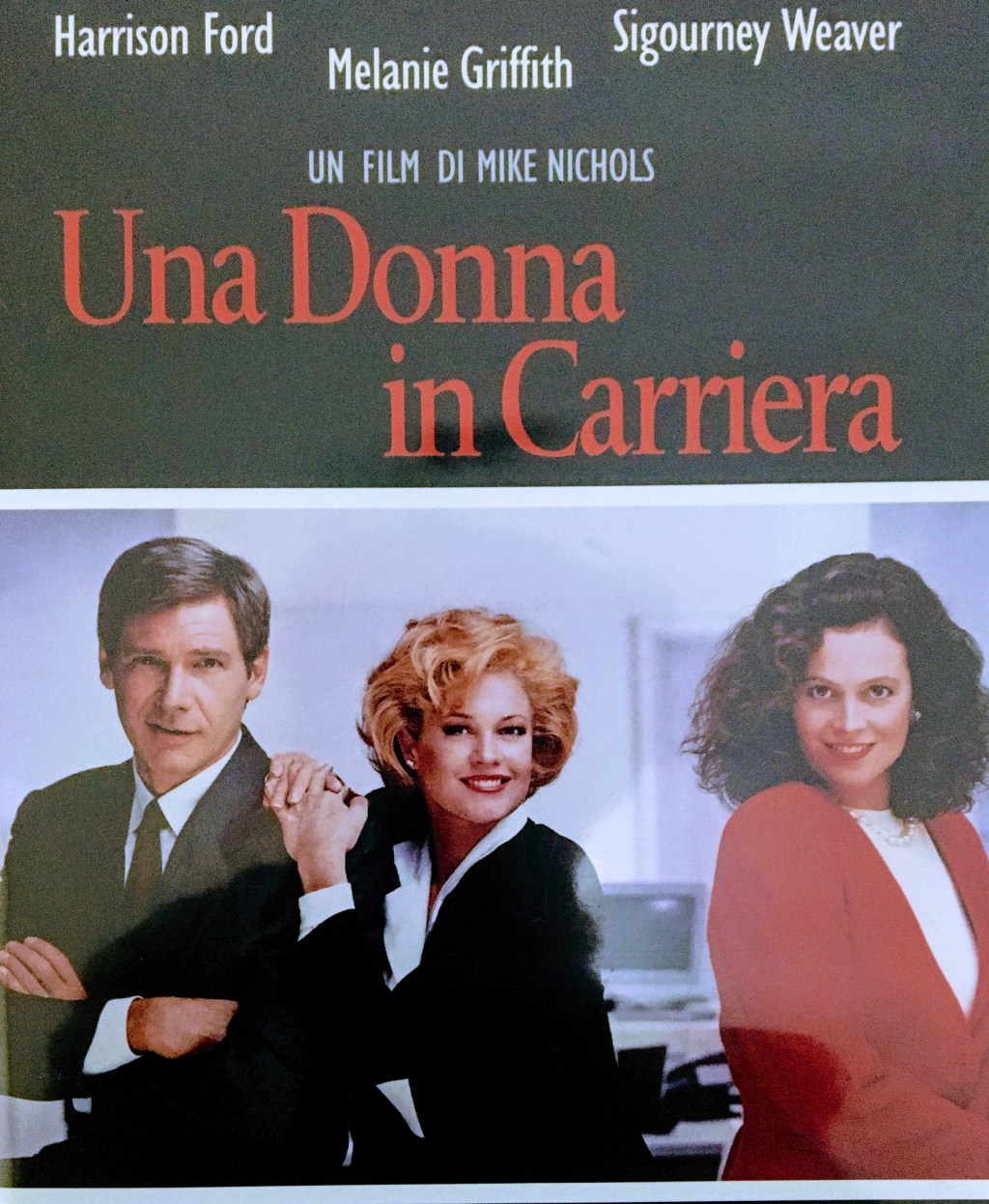
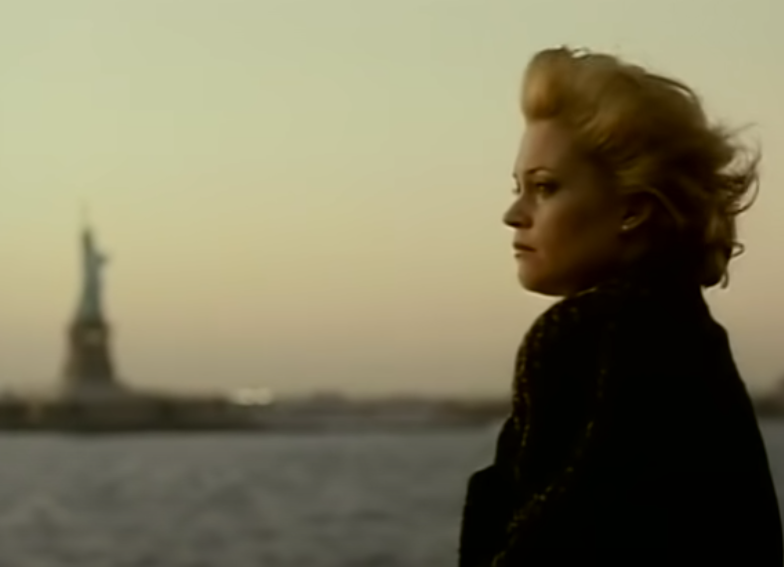
Most people when they go to New York visit Liberty Island. I visited Staten Island. Because of Working Girl.
While I always loved the film, I also sort of hated the message. Years later, semi-marooned in an insular satellite town of Rome, living through the end days of a doomed relationship, I began to see it in a different light; a post-pandemic nostalgia for the hustle, and a revision of the American Dream.
Working Woman
Working Girl (1988) in Italian is Una Donna in Carriera or ‘A Career Woman’, an inadequate translation which painfully misses the playful, if subversive comment on the patriarchy. I wanted my then-boyfriend to see it as part of a campaign to get him up to speed with my canon of essential pop-cultural references. In it, Melanie Griffith plays Tess McGill; an ambitious temp from Staten Island who risks it all to get to the top.
While ‘Career Woman’ is not, to my knowledge, an Italian euphemism for ‘lady of the night’, when Tess discovers boss bitch Sigourney Weaver is passing off her business ideas as her own, McGill uses her “bod for sin” just as much as her “head for business” to get ahead (enamouring Weaver’s boyfriend Harison Ford in the process). She also slaps back at the patriarchy by pouring champagne all over a coked up, handsy Kevin Spacey on their way to a “business meeting” set up by a couple of fratboy Wall Street co-workers, and later publicly calls them “sleazoid pimps”. It’s an ethically ambiguous tale of ambition and revenge with a lot of great outfits and one-liners, and deserves its special place in 80’s western popular culture.
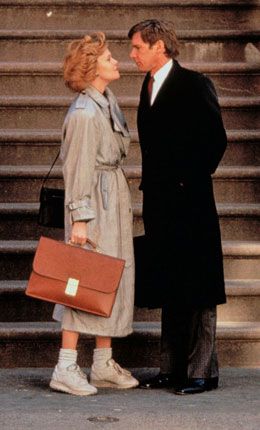
Every day, Tess takes the ferry with best pal Joan Cusack from Staten Island to her Manhattan office job. She wears Reebok Classics and slouch socks with her pencil skirts and shoulder-padded blazers. A look I would normally scorn back in London, finding the sight of scuffed neon New Balances and dreary greys worn by bleary-eyed City workers stuffing Pret in their mouths first thing in the morning a bit grim. Still, for some, the ‘suits and sneakers’ phenomenon is a form of female empowerment and, to her credit, Tess does it pretty gracefully. She promptly changes into stilettos when she gets to the office, literally ‘elevating’ if only symbolically, leaving behind her stagnant Staten Island life, not to mention her caveman boyfriend Alec Baldwin.
Battle of the Islands:
| Fiumicino | Staten Island | |
| Southern Italian immigrants | ✔️ | ✔️ |
| Ferry commute with Joan Cusack | ❌ | ✔️ |
| Southern Italian knuckleheads | ✔️ | ✔️ |
| The smell of freedom yonder | ❌ | ✔️ |
| Pretty good pizza | ✔️ | ✔️ |
| Strip malls | ✔️ | ✔️ |
| 30 minute drive from The Colosseum | ✔️ | ❌ |
Sacred Island
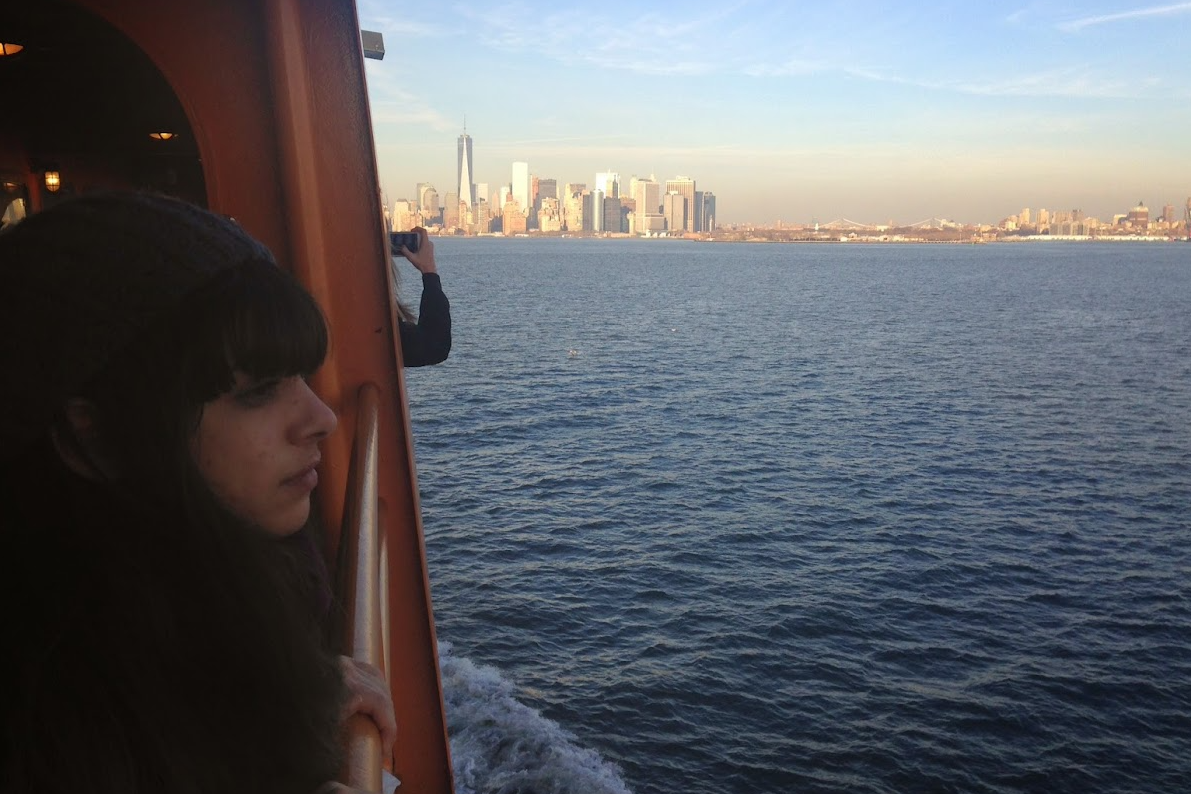
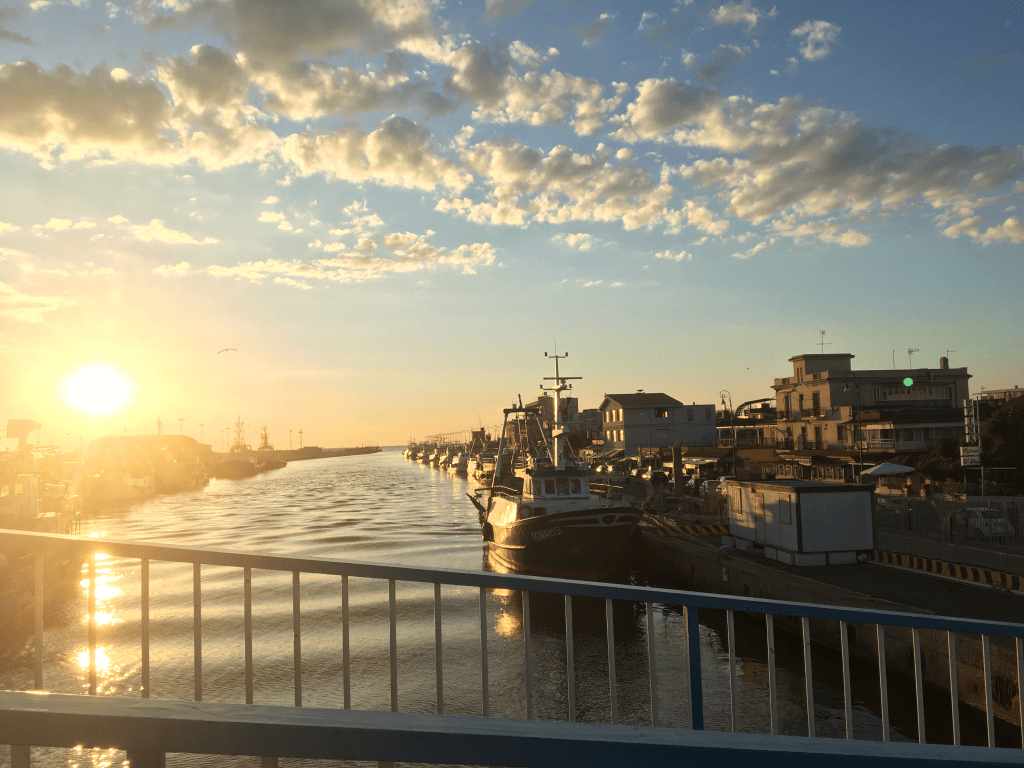
A ‘just barely commutable’ bus and metro ride away from Rome; Fiumicino (meaning little river) became my personal Staten Island. A cultural vacuum stretching forty kilometres up the coast, I dubbed it Fiumicidio (Rivercide)– where rivers and dreams go to die. My former home considers its nucleus to be the area known as Isola Sacra, or Sacred Island. This insular town straddles the river Tiber which, somewhat in desperation, divides in two before finally liberating itself in the Tyrrhenian Sea.
An ex-industrial, still functional fishing town, much like Staten Island, Fiumicino is home to largely second and third generation southern Italian economic migrants. Not surprisingly, their offspring are aspirational, if what you aspire to is owning a souped up Fiat 500X, a 70 inch TV and a permanent work contract of any kind. Port jobs have been replaced by airport jobs, and decades of nepotism see to it that airport authority employment is largely a closed shop. Illegal fishing and the purchasing of fish fresh off the boats is tolerated, and at midnight you can hear fireworks being set off; something of a habitual Neapolitan birthday tradition. Since the fat cats at the local council saw to it that the town’s main train station was to be demolished in place of luxury apartments, I often fantasised about taking a fictional Fiumicino ferry, bringing me triumphantly back into the city on the mighty river Tiber to the soundtrack of Carly Simon’s Let the River Run on loop.
Fight the Sleazoid Power
Walking the streets of central Rome to and from my teaching jobs, I often stopped to read the graffiti. The ubiquitous antifascist scrawlings have mostly been replaced by bright pink anti-patriarchy edicts commanding us to have it destroyed (to put it politely).
Italy is a country where highschool students protest the attempt to ban mini-skirts by sleazoid pimp principals, who insist their male teachers cannot be blamed if girls wearing miniskirts, “catch their eye”. It’s one where conservative views about a woman’s place in the home are still commonplace at the dinner table (by people young enough to be more enlightened), and one where a bill to legally define homophobic crimes as ‘hate crimes’ has been disputed in parliament for over four years.
You’ll save yourself a Xanax prescription when you remember that sexual revolutions and the feminist wave have transpired in different ways outside of the Anglosphere. And yet I’ve always maintained that southern European women are as ballsy as the best of their northern counterparts. But with those balls comes a lot of Catholic baggage, and many, just like Tess McGill, have been saddled with a Mary Magdalene complex. These are the kinds of things I pondered on my dreary commute from Rome to the sleepy seaside suburb.

(Also scrawled in pen to the left “Viva la figa” – “Long Live the Pussy”)
Italians Don’t Necessarily Do It better

If you ever head down Sacred Island way, you’ll find comfortable property-owning pensioners lining the river cafe terraces in cheap athleisure, sunglasses and gold chains. They encapsulate a postmodern kind of Italo-American culture, refracted back through the prism of Euro-centredness. It’s Italians trying to look like Italian-Americans trying to look like Italians. Think Paulie from The Sopranos.
On the weekends, rather than go to the Eternal City, people drive out to the strip mall, favouring the ample parking and all the “space”. There seems to be an awful lot of preoccupation with “space” out in the suburbs. And yet entertainment consists of 20 people minimum, huddled around a table on plastic patio chairs for the sheer act of being all together.
As a city girl, I used to feel hemmed in (read aesthetically numbed) by the lack of space, which is to say anywhere at all worthwhile to explore on foot. And that thirty minute distance from Rome is of course in car terms. By public transport, it’s an awkward hour if you’re lucky.
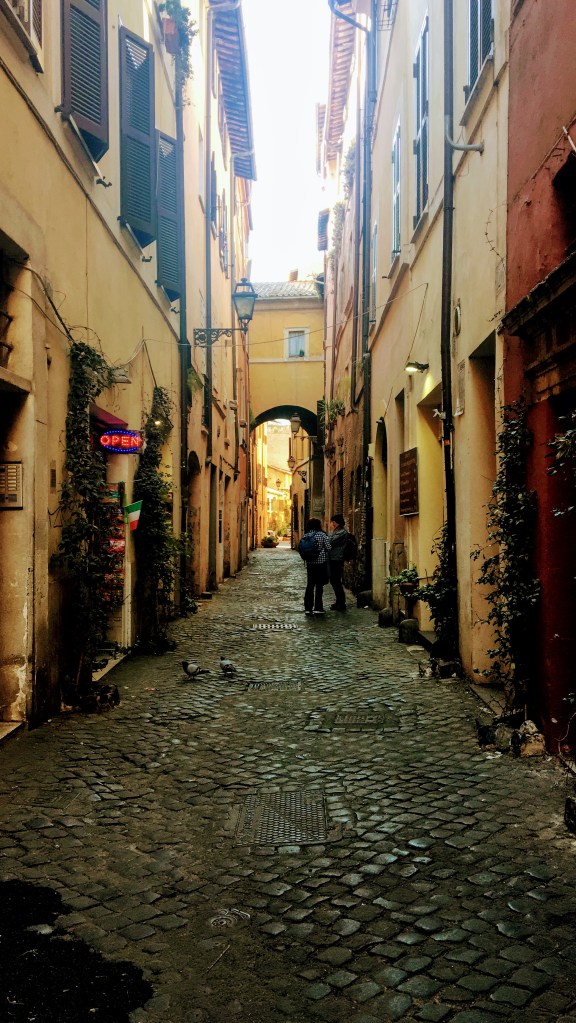
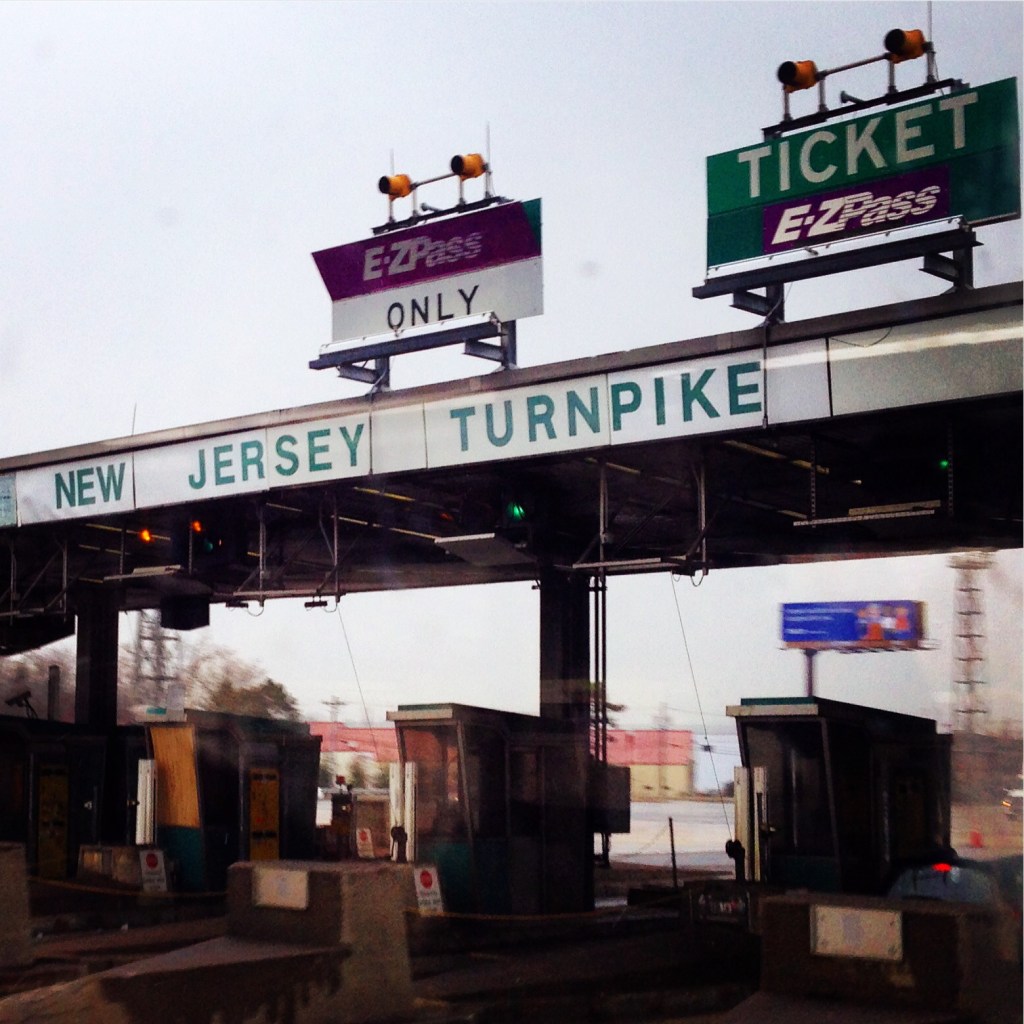
So, like Simon and Garfunkel on the New Jersey Turnpike, I found myself counting the cars on the Raccordo (the ring road surrounding Rome) and looking for America- except my America was Roman, salmon-coloured turn of the century buildings, baroque churches, black cobblestones, and layer upon layer of dank, dark and indiscernible history.
Very Vip
Tess McGill’s America is a classic work-hard / fake-it-till-you-make-it, and when she finally does, not only does she get her own office but her very own assistant (with whom she promptly sets up a sisterhood pact centred around not needing to get her coffee unless she’s getting one). No sooner are her feet on her desk than she is on the phone to Joan Cusack, who, among a sea of back-combed hairdos and Boy George make-up, proclaims to one and all, “she got her own aaaaaawfice!”. Tess McGill’s triumph is a triumph for all women, despite the proto-Anna Delvey way she got there. Carly Simon chimes in with a reprise of Let the River Run and we are reminded that this is, apparently, the “New Jerusalem”.
Younger me scoffed at this ending. All of that just to end up spending all day in a boring grey office? But older me can’t help but rejoice with Joan Cusack and congratulate Tess on getting what she wanted. I’m not saying that I want to be one of the little squares in Manhattan. I suppose in hindsight, what I missed was being among people who believed that anything is possible. I envied Tess McGill’s city life and getting dressed up and life without a face mask. I even missed Pret.
A Very Strange Kind of America
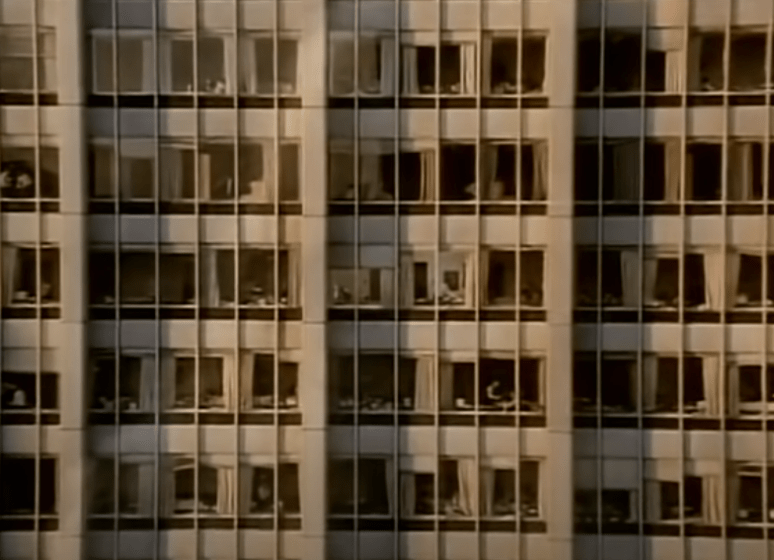
In the final scenes, the camera switches to an exterior shot of Tess through a grey box office window, pans out to reveal the floor, then the next three floors and then further and further out until you realise Melanie is just one tiny box among thousands of grey squares that make up the colossal office buildings in Manhattan’s financial district. And then, like some chilling episode finale of Black Mirror, she fades out into nothingness and we lose her. Despite her Randian individualism, she just disappears. Shoulder pads and all.
On Sacred Island, individualism is stifled for the sake of keeping the status quo. People disappear into the quicksands of conservatism and mediocrity. After a suffocating eighteen months of cohabitation, when our relationship drew to a close, I gathered every ounce of strength I had and moved back to Rome and my precious cobblestones and salmon-coloured buildings.
Regardless of where you call home, I’m struck by how many of us grow up looking for our own version of America, and how conflicting these versions can be. How many of these cultural references we’re exposed to in our formative years shape our worldviews, expectations and aspirations? To what extent does this pervasive American popular culture go on to inform our individual realities?
I still teach suburban middle-schoolers on Wednesday afternoons, the majority of whom wear some combination of Vans, Nike, Converse and Puma. They follow the NBA, use, with their limited English, American slang gleaned online, and can name more American states than provinces in their own country. Yet when I ask them what they want to be when they grow up, the overwhelming majority elect state jobs; notary publics, military pilots, lawyers, civil engineers. This, in contrast, is still the Italian Dream– a cushy civil servant job for life.
For their parents and grandparents on Sacred Island, the American Dream is alive and well; albeit a stale kind of 60’s suburban dystopian version. It’s the dream of owning a big house, a giant fridge freezer, a family car, and one where you never really ever have to leave because everything you could possibly want is within a 15 minute drive: the strip mall, the supermarket, the beach. But also one where people are too scared to fly the Pride flag for what it is, and so culturally appropriate it in the name of Peace (true for all of Italy actually); where gay people in their twenties are still too scared to show any PDA lest some numbskulls beat the crap out of them; and where the resistance to improving public transport infrastructure is enough to make Greta Thunberg herself, self-immolate.
It’s truly a tragedy that the can do / fake it till you make it attitude never really flourished here. That for me is what it’s really all about. I’m faking it when I speak Italian, every time I stand in front of a bunch of students and every time I set pen to paper; fingertips to keyboard. I WILL make it. Of all the influences the American Dream could have had, that surely, is the one this country and every country needs the most.
For my part, I’ll keep counting the cars on the New Jersey Turnpike and judging people based on the Gospel according to Seinfeld; no less entertained and inspired by what America is, but no more seduced by what it’s not.
Farida F Alvarez
Written originally April 2022
Revised May 2023
 Farida F. Alvarez
Leave a comment