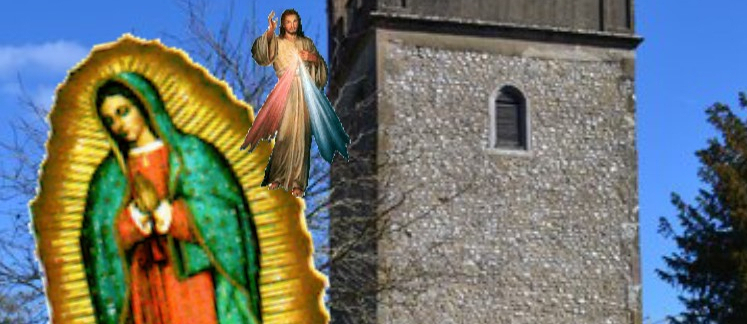
Until I moved away from London for university, I’d assumed that everyone in the Southeast of England was mixed. English of course, but surely with new, added and improved, taste-the-rainbow flavours?
Growing up of mixed parentage in a global city, you’d be forgiven for thinking that you could easily pick and choose your identity from our capital’s neonstrip lit, all-you-can-eat culture buffet, but it’s so much more about the hard road towards figuring out self-acceptance. Sometimes you end up carving out an identity for yourself just to satisfy others’ needs to pigeonhole you. And self-enforced, two-dimensional identities can get disjointed, caricatured and mangled. Without a solid foundation beneath them, they will eventually fray.
These stories are an attempt to weave those personal truths together.
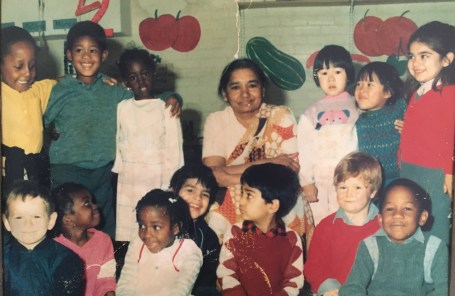
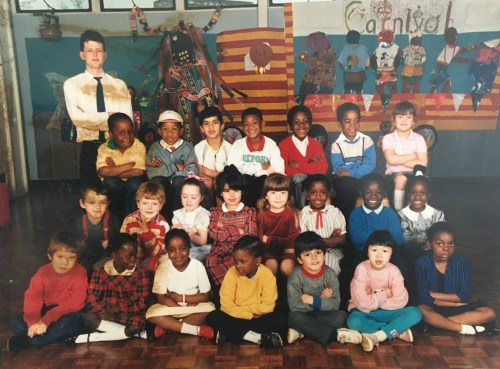
Part One: Primary colours
I remember my childhood as a kaleidoscopic United Colours of Benetton photoshoot extravaganza. At primary school, there’s Mrs Shah, our Pakistani teacher showing us Judo moves in reception class – just because. Mrs Safa bringing a menorah into school assembly and teaching us the Hanukkah story . Mr Knipe from Belfast playing the penny whistle and teaching us Irish folk songs. Deciding Diwali, the Hindu festival of light, was my favourite festival of all after spending all day making cards and paper lanterns, and delighting in a fragrant rice dish made with chicken, chickpeas, almonds and sultanas that one of the mothers brought in. Then, when we were eight, several of us joined a Caribbean steel drum band practicing every week in a community centre near Portobello Road (I was on the treble bass) and during the end of year assembly, I sang traditional Spanish Christmas songs with my Venezuelan classmate called Wendy.
A joyful carnival of sights, sounds and textures it may have been, but in Year 6, aged between ten and eleven, in that crucial year before we are sent to secondary school, at my primary school at least, things briefly took a turn toward the serious. Religion and race suddenly mattered. Feelings and identities were at stake. If you went to a school anything like mine, you’ll know, this was probably inevitable.
One day, aged ten, my North African dad gave me a very rudimentary R.E lesson where he’d said in typical minimalist fashion, “the Qu’ran, the Bible- it’s all the same. It’s the same God. There’s only one. That’s it.”
Aha! I thought to myself.
So the next day, I went to school armed with my new indepth and flawless theological wisdom, and presented it to Najat at playtime. “Your God and my God is the same”, I said wisely. Najat knew a bit more than me because she went to Qu’ran school on Saturday mornings, so she smiled benignly, as though I were a mere simpleton really, but conceded that Muslims believed in Mary and Jesus too, it was true.
Just then, Mr Singh, our Jamaican teacher (of Indian descent), a loud and PROUD atheist walked past and having overheard us, burst out laughing. He always rebuffed any talk of religion in class with a good-natured and hearty pa-ha-HA! He was very irreverent like that, Mr Singh, in a way unthinkable now. But we were used to his sense of humour and so we laughed too.
Mr Singh, who spoke standard English, but could switch to hardcore Jamaican at the drop of a hat when he wanted to give the naughty boys a pegging down in a tongue he knew they’d understand, would sometimes entertain us with Jamaican poetry. He’d then get those same naughty boys to translate the patois and Jamaican English to us, raising them up again and validating their heritage.
That we were able to speak and laugh so openly about religion, explore each other’s cultures and be both conscious and accepting of Mr Singh’s blatant atheism at the mere age of ten is something I have come to treasure more and more the older I get.
We took racism very seriously though. In a school like ours you had to. The racism wasn’t strictly white on black; it was often Afro-Caribbean on African. The Afro-Caribbean kids, with their mixed heritage and well-established attitudes to grooming, in particular of the hair, found the recently arrived first generation kids from West Africa utterly, well, rustic. Their skin, naturally darker with little to no European mixture, in combination with their hair; proudly wirey, thick and African, were mocked mercilessly. Realistically, it was only brought to the attention of the teachers once the white kids started parroting the same mean comments, inventing variations on the theme. At a very serious and stern assembly it was made crystal clear that at no point, were we to EVER make a comment about the colour of someone’s skin. That was racist. That was NOT allowed. End of story.
So it stopped for a while.
But then one day, Fatima (Sierra Leonean) turned her attention on me; not exactly lilly-white, and definitely not that kind of white with the pinkish hue. I’m southern, olive-skinned I guess, but only when I have a suntan, which would be more often if I lived where my genes originate. Up here in northern Europe, I’m beige with a pinkish hue at best. My suntan from my annual Spanish holiday must have been wearing off, because Fatima began to refer to me as “yellow-skin-Spanish-omelette” everyday for about a fortnight.

It just about got to me, but even at the age of ten, I knew her game. She thought the no commenting on the colour of someone’s skin rule didn’t apply when it went in the other direction. But as a beige kid with a pinkish hue, I hadn’t exactly been exempt from racial slurs either.
So I told on her.
And we were both called into the head teacher’s office where it was made abundantly clear that it had to stop. And Fatima cried. And I felt vindicated. A rule is a rule.
Years later,I came to see that Fatima was most likely acting from a place of pain. That in her mind, her taunts couldn’t possibly hurt me as much as the abuse she had no doubt suffered until then, not to mention the disproportionate amount of racism that she would experience in years to come.
Though the canvas of faces became decidedly paler in my adult years, these and more lessons from my formative years have remained with me. Though undeniably beautiful, the rainbow is fragile and you learn to handle it with care. That’s what growing up in NW6 / W9 in the 80’s and 90’s will do for you.
Part Two: Anglicans don’t care much for Mary.
Growing up in a Surrey village in the 1960s probably wasn’t quite the same as my rainbow school experience, and I tried to remember that whenever things came up with my very English ex in-laws.
In the almost eight years my English ex and I were a couple, my North African heritage was never really acknowledged by his parents- too foreign I think. Once in the early days of our relationship, at a family lunch in a Brighton restaurant, mother in-law asked what my surname was (again). At the time I still used my paternal Arabic surname. I had to say it three times down the table, she couldn’t quite get her ears around it. “Whaaat!!!?”, she practically squawked after I’d repeated it for the second time, with a great big rising tone that could only signify surprise fused with dismay. Hardly the encouragement needed in order to repeat it a third time. I remember she looked horrified while the rest of my ex’s family just laughed it off. Silly mummy, not used to foreign names, hahaha. So I took my cue from them, joined in with the laughter and tried not to take offense.
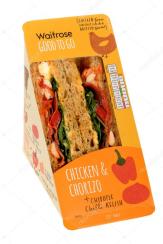
But the in-laws had been to Spain of course, so they could handle my Spanish side. That was fine. I suppose it only slightly bothered me that almost every time we went to the family home in West Sussex, during kitchen one-on-one time with Mummy-ex, her having recently bought chorizo from Waitrose almost always came up in conversation. Or that she’d tried adding chorizo to a pasta dish or something and it was lovely. It was at a time when chorit-tho was trending hard in the UK and well, I chalked it up to mindless kitchen small talk. It didn’t mean anything. It wasn’t necessarily reductive, I’d reason, optimistically.
Another time, the in-laws came to stay with us when we still lived in Brighton. (Hove, actually). Back then, my weekend treat was southern Spanish breakfasts which consisted of either toast rubbed with a raw clove of garlic and drizzled with olive oil, or tomato toast with serrano ham. It’s indulgent and savoury and will always remind me of sundrenched, long weekend escapes to Córdoba or Granada.
That morning I’d opted for the garlic variety, while ex-boyfriend and in-laws were getting stuck into their second cup of tea and a big bowl of Frosties. Personally, I think anyone over the age of twelve who still eats Frosties needs to seriously look at their life choices, but my ex had a Seinfeldian penchant for collecting different kinds of cereal and I supported it. That his parents would go for the Frosties too, was not something I particularly understood. But they were guests in my house so load up the bowls I thought; mi casa es su cavities.
However, the same level of tolerance was not shown my way by Mummy-ex when she saw me get handy with the peeled garlic clove and the freshly toasted baguette. Bemused, she questioned what I was doing, and following my explanation, she turned up her nose in disgust and declared that she couldn’t have garlic for breakfast.
With a flash of inspired diplomacy, I simply smiled and replied, “I guess it’s just cultural”, and let it hang for a second. She thought about it for a moment and then returned the smile.
“Yes, I suppose it is, isn’t it?”, she replied.
She liked that. What wasn’t to like? I had given her the perfect euphemism to use when you encounter something foreign that you don’t understand.
“Cultural”. What does that even mean?
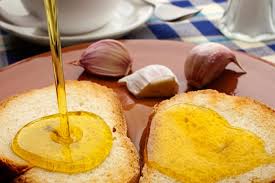
Ex-boyfriend later took them both on a tourist trip around the Laines, Brighton’s cutesy and artsy shopping streets, while I stayed at home to work on my MA dissertation. There, my ex informed afterwards, in between fits of laughter, at anything and everything ethnic or incomprehensible, Mummy-ex would comment;
”Yes….It’s really cultural, yes..”
“I suppose that’s quite cultural”.
“It’s all a bit cultural here, isn’t it?“
I laughed too, and tried to reserve judgement, but really I was glad that I had given her a piece of language to use to describe her perplexity, rather than squawking surprise and turning her nose up. I wonder if she ever uses it anymore.
At home with ex-boyfriend, I leaned into my Spanishness yes, the Penelope Cruz outbursts perhaps, but I also found myself leaning into my Catholicism. Not because I’m an ardent believer (at all), but because I found I was routinely mocked for it. It was all good-natured banter between us, of course, but still it was somewhat othering. I’d give as good as I got, shaking my head at the behaviour of you people– meaning Anglicans. The whole thing was part of our repartee and for the most part it was a lot of fun.
Soon, every time we went on holiday somewhere Catholic, I’d collect a Mary. Just a little one; maybe a votive candle or a decorative fridge magnet. In Spain, my ex couldn’t get his head around why there were so many different Virgin Marys assigned to different villages.
“Are they all the same Mary? Are they all different young virgins all called Mary?”
No, they are places where Mary has appeared as a vision to a saint or maybe just to people who prayed really hard.
‘It’s just so weird!”.
You people don’t understand. This is all part of the Catholic mystery. That’s what faith is.
“Ha!”, he’d scoff. And so on.
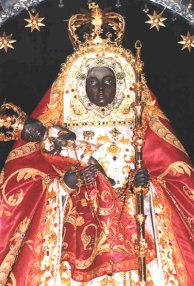
One year in Tenerife, I picked up a candle and a magnet of the Virgin of Candelaria, (one of my favourites) who appeared as a black lady to the natives of Tenerife in the coastal town of Candelaria, and converted them to Christianity. We got them at this absolute treasure trove of a kitsch Catholic souvenir shop. I would have bought so much more I’d had the baggage allowance for it.
My dream was to eventually buy one of those three-foot high statues of the Virgin; the kind with the glow-in-the-dark red sacred heart, and place it in the corner of the entrance hall of our flat. Mostly for me, but also just to mess with his parents a little when they came to visit. But alas our relationship ended before I could fulfil my Mary goals. Who knows to what heights they would have reached had we stayed together. Had we eventually moved into a house with a garden, how far would I have gone with the religious paraphernalia; full-sized garden statues perhaps? An imposing white stone Mary to watch over us whilst having Pimms and a barbecue? A few sneaky little Marys hiding among the rose bushes, wielding rosary beads, right where you wouldn’t expect her? I’d have placed a couple in the guest bedroom for good measure, and a holy water font by the door, that was well on its way. The possibilities were endless. I’d still love to own a little Catholic grotto in the back end of my garden one day. Except I think now, I’d fill it with lots of other little mementos and religious trophies too.
In any case, soon after our Tenerife trip, we were back in England’s green and pleasant, not to mention sensible land, for a routine family home visit. The in-laws had organised a little day-trip to West Dean.
West Dean is one of the jewels of West Sussex. If you ever go to West Sussex or meet anyone from West Sussex, make sure to always say West Sussex. Because it’s most certainly West Sussex. It’s not just Sussex. And it’s the better of the Sussexes. East Sussex doesn’t hold a candle to West Sussex. Make sure you say that to them too. East Sussex simply does not hold a candle to West Sussex. It’s super lovely.
West Dean Gardens is indeed a super lovely sort of place; it’s also part of West Dean College of Arts, a converted historic home, famous for its last owner’s solid collection of modern art including Dali’s Lobster Phone. So really, it was the last place I expected to have a religious encounter.

We went there primarily for the genteel botanical gardens, and there’s also a cafe that does good tea and carrot cake, naturally. Just off the grounds, walking through West Dean proper, you will come across the parish church of St Andrew’s. Nothing to write home about especially, but we stepped in and had a little look around. Anglican churches, unlike Catholic ones, are bare and stripped down by comparison. Shunning gaudy iconography and lifelike statues bearing the anguish-ridden expressions of The Virgin or a martyred saint, many often bear the crests and standards of aristocratic families and local platoons deployed to fight in the last world wars instead. They’re always dusty. There might be a nice rose window to admire, but on the whole, Anglican churches are proudly plain; occupying instead a community centre role in the village. Catholic churches by contrast, are all about the theatrics; the vaults, statues and artworks are all there to inspire awe, devotion and a good measure of fear.
I knew this going in of course, so wasn’t expecting any particular wow factor as I wandered down the aisle. As I got to the altar (resisting the urge to genuflect) I turned right into a south-facing nave and a large gothic-esque window. There, on her own, was Mary. A very small and humble Mary, all dressed in white, but there she was. I stayed with her a while. Frankly, she was the last person I expected to see there. Just then, my ex appeared.
“Look who I found”, I said.
“Ha, trust you to find Mary!”
“I wasn’t really expecting her to be here, it’s a nice surprise”, I added.
We took the conversation upstairs to the gallery, where the organ is housed. The in-laws were already up there and asked what we were talking about. Daddy-ex got curious;
Why do Catholics care so much about Mary?
I remember telling them it’s just that the focus is a little bit different in Catholicism. There’s more emphasis on the “sacred family”, so you see a lot of iconography with Jesus, Mary and Joseph. But this didn’t quite satisfy Daddy-ex. He persisted;
Yes, but, if Catholics were really into a particular saint, I would understand that more- but Mary? It’s not like she did anything. There’s no Gospel according to Mary.
That crossed a sacred line somewhere in my personal and cultural sensitivities although I couldn’t quite isolate the reason for it. I thought, but I don’t know now if I actually said it out loud, but she’s the mother of God…..
Later I realised I didn’t feel offended as a (nominal) Catholic, it was more the being badgered for being different. Had it been said elsewhere in the spirit of hearty pub banter, then I think I’d have had another reaction. But the fact that we were in a church smacked of all kinds of wrong at that moment. Ultimately, it was another example of feeling othered. Here I was, their son’s Catholic girlfriend with the weird name, who eats garlic for breakfast, defending Mary. Just not very English, is it.
The conversation fizzled out when I stopped responding and we all spread out again. I made my way down to the porch – the seated entry into the church by the main door. I remember closing my eyes and reflecting on the conversation, trying to work out if I was justified in being offended or feeling wronged. Or if it was just all good-natured curiosity.
I opened my eyes and put my hand to my nose, I thought I felt it running a bit. When I examined my hand, to my dismay I saw blood. I scrambled around in my tote bag looking for a tissue and held it up to my nose, tilting my head back because I’d heard somewhere that’s what you’re supposed to do. In reality, I had no idea. I’d never had a nose bleed before.
When the ex and the in-laws found me, I was still sat there with my head cocked back and a tissue, visibly bloody, in my hands.
“Fari, are you alright?!”, my ex asked.
“I’m bleeding”, I said. “I think…. it might be Mary“.
My ex fell about laughing, but the in-laws didn’t really know what to say so they walked on a bit.
“Are you having a Catholic mystery, Fari?”, asked my ex, teasing me. But I was leading the teasing so I’d already come out ahead.
“I think I am, yes-
I think I’ve just been visited by The Virgin of West Dean“.
My ex continued to laugh and handed me another tissue, placing his arm around me to comfort me. The in-laws continued to walk on, choosing to ignore my nasal Stig Mata. Just a bit weird for them, I think. I can’t really blame them.
But who’s to say I wasn’t visited by a force, a universal mother figure, personified by Mary? Perhaps it was symbolic of a cosmic bond between humans. That in moments of personal anguish and perturbation, you will always find compassion and understanding of the human condition in the least expected places?
But Anglicans don’t care much for Mary. I left West Dean that day with my own personal mystery; dazed, certainly othered, maybe even by my own hand, but perhaps on a cosmic level, seen and somewhat understood.

 Farida F. Alvarez
Leave a comment