
My visit to Algeria was inevitable.
Yet I thought it would never happen. I had grown accustomed to not having gone. It was a well rehearsed line. “Yes, my father is Algerian…No, I’ve never been…How come? Oh, well you know. It’s a complicated country, and I think my dad has a complicated relationship with it, so you know…” This is how I would normally side-wrangle myself out of cultural interrogations by curious Christophers and Karims, who have queried my lack of Algerian-ness over the years. My father’s decision to take me now, in my ripe and raw thirties is perhaps a result of him becoming in touch with his own mortality, or given my unmarried, childless status, a naive notion that he is at last taking his child to see the family and well, better late than never, right?
Realtalk: I don’t really know too much about my dad, and what he got up to when he lived in Algeria, nor the exact nature behind his move to England. The details surrounding his departure are still cloaked in mystery and not even my mother knows exactly why he left. My elder cousin (of family secrets fame), says that he was involved in some kind of organisation, and for reasons still unclear, it became apparent that they had to part ways. And countries even. A good friend of mine believes this should scare me. It doesn’t. But it’s true that I should be more curious. Whatever his reasons for leaving, I do know that he has, as they say in French, “his ass between two chairs” (son cul entre deux chaises).
I also know that when he lived in Algeria, it was technically still France. As such, the country that he once knew, French Algeria, no longer exists. I cannot imagine what it must be like for one’s homeland to exist only in memory. To see it, but somehow, to not quite recognise it. To witness your country, like so many former colonies, replace western colonisation with homegrown corruption. To live with a kind of postcolonial, national identity crisis. And as the years go by, feel the inevitable bittersweet nostalgia, disappointment and loss.
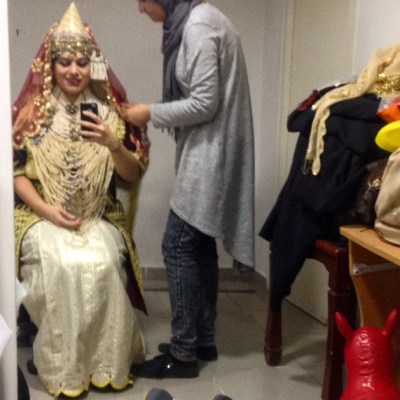
Being of mixed parentage, growing up in a country belonging to neither parent, my own ‘identity’ has always been something of a bête noire for me (permission to roll eyes). I remember the odd occasion when the notion of my identity would come up in my dad’s presence, and for him it was simple. I was British. I was born in Britain and that was that. I was to forget about Algeria, and I was definitely to forget about anything to do with the Arabs. Since we never visited the country, nor knew any other Algerians or Arabs in London, these instructions were easy enough to obey. In my adult years, I have realised that this reluctance to share his Arab or Algerian heritage, can only be due to his own identity issues he’s been battling with his whole life.
I have, on rare occasion, heard my father identify as a Muslim Arab, albeit on a spectrum varying from the assured “Je suis Arabe, Algérien, et Musulman!” (The Holy Trinity, as I like to think of it) to “Les Arabes? La dernière race après les crapauds, sale race! ” (Arabs? The last race after the toads. Dirty race!). Nice. He is, I suppose, the quintessential self-loathing Arab. The Ramadan-practicing consumer of pork. The French speaking, Camembert-eating, Cassoulet-simmering, Côte du Rhône drinking, anti-European. Technically a French citizen, but extremely unlikely to claim his right to French nationality at this stage in his life. Which is a shame since a French pièce d’indentité could come in handy in today’s crumbly, shaky, flakey Europe.
Realtalk, round 2: I don’t actually get on with him that well. He is, what we might call, ’emotionally distant’ (permission to roll eyes again). And I wouldn’t say that my issues with him are especially resolved now that I’ve been to the fatherland. This isn’t that kind of movie.
Emotionally speaking, he is a semi-dormant volcano. A stoic and not-so-strong-and-silent type from a bygone era, and not really one for making conversation. Maybe this is just typical Arab dad behaviour too. I confess, I wouldn’t know. As such, there’s no real way to know for sure if he really is harbouring a bittersweet nostalgia for a lost homeland, or if this is just my silly, free world way of romanticizing his past. Turning it into a narrative to serve my own egotistical needs to understand where I come from. (Wait, didn’t you realise that this is all about me?!) On occasion, inner and outer frustrations do get the better of him, and I recall many times during my childhood when he would erupt, sending a torrent of verbal abuse toward my mother and me. This anger lava would pile up, harden, crystallize, and thus a wall of resentment was constructed between my parents. An only child, I spent most of my time negotiating that wall, often opting to stay “on my mother’s side”, as my dad would not hesitate in reminding me.
When the anger was not directed at us, it would sometimes be shot upwards at our neighbours. While they may have been behaving inconsiderately, diplomacy is not my father’s strong suit, and so his eruptions would only exacerbate the situation time and time again. My mother would always say, “that’s his inner Arab warrior side. He can’t help it. He should be fighting tribes in the desert”. I think she’s seen Lawrence of Arabia one too many times, but she may have a point. My father comes from generation upon generation of families suffering as a direct or indirect result of colonisation and/or war.
In recent years, I have thought about my father appearing to be constantly at war, either with our neighbours, his employers, his brothers in Algeria or my mother. Was he externalising his inner torment? In hindsight it appears so. I could not understand that as a child, and I certainly could not and still cannot understand his general disinterest in the upkeep of the house and his refusal to let my mother or anyone else make general (or drastic) improvements that ordinary homeowners will undertake from time to time. Is this a form of depression, or is it rooted in something else? In Algeria, it seemed that clan-focused individuals apparently do not make for keen residents’ association organisers, and so buildings easily fall into disrepair. At least, this was my cousin’s rationale. Each blaming the other or the government for not assuming the duty of care, or perhaps unsure as to how to personally take action and responsibility. It was all too reminiscent of my dad with the broken cooker that took him five years to replace. It was starting to seem as though perhaps my father had created his own mini-state of Algeria at home.
In fact, my mother often said my dad would have been happier living in a tent in the Sahara like a Tuareg, a tribe from whom there is some doubtful lineage. Happy as long as there were a hearth to cook the food, copious cushions and covers with which to create sleeping arrangements for the family and the extended family. Happy indeed, so long as there were a market nearby at which to buy the meat and vegetables at the best price. No neighbours with whom to quarrel for simply existing, and therefore by existing making noise. No boiler to replace, or central heating to mend. No one above but the sky and the stars. No one next door but perhaps a camel or two.
And yet, my father is no Tuareg. And in his time enjoyed bars. Many bars. And the many trappings of modern liberal European life. And a Jewish girlfriend, and eventually his Spanish Catholic wife. He is the bacon-eating practicer of Ramadan after all. Interestingly, my father WILL NOT eat or even have fresh pork in the house. That’s a big no-no. But bacon? Salami? That’s fine, knock yourself out. Why? He reasons that since the pork has been smoked and/or cured, it’s safer to eat. Smoked pork is Halal, in the quranic testament according to my dad. I call it “Chorizo Sharia”. Chorizo is fine because of said curing process, also because it tastes awesome.
This is one way my dad has adapted to the pork-eating west. But can Arabs in general reconcile Western ideas of progress with their pride in Arab history, culture, heritage and respect for religion? I see that it is possible, but so often it seems to be accompanied by an inner torment which manifests itself when one least expects it. There are times when the inner-Arab must rule and reject the outer European. It’s one step forward and two hypocritical, contradictory steps back. It’s wearing five kilos of designer branded makeup on your face and covering your hair with a Gucci scarf to represent “modesty”. It’s a nun in a mini-skirt, I joked with one of my Algerian cousins in Oran. A cultural Jekyll and Hyde. God help you if you try to call them out on it.(I realise I am conflating Arab culture and Islamic practices here, but in Algeria the two are inextricably linked since it forms an integral part of their constructed cultural identity. I refer back to the holy trinity, “Arabe, Algérien et Musulman!”)
His hometown, one day my father took me on a whistlestop tour of his Oran. Showing me his former office building where he was a civil servant in the tax collections office. Then, nearby, his old apartment building. He had been renting from a French woman, but towards the end of French occupation, when it became clear that she would need to leave, he bought it from her, proudly clarifying that he was not “one of these squatters” (referring to Algerians who had taken over apartments when the Europeans left). Regrettably he sold that apartment when, ironically, his brother started “squatting” in it. I imagined, simply because getting a straight answer out of my dad is nigh on impossible, that it might have been something of a delicate matter to charge your brother rent in Algerian society, and so my father chose to sell the property instead, thus forcibly evicting him. (They are no longer on speaking terms, my father’s choice).
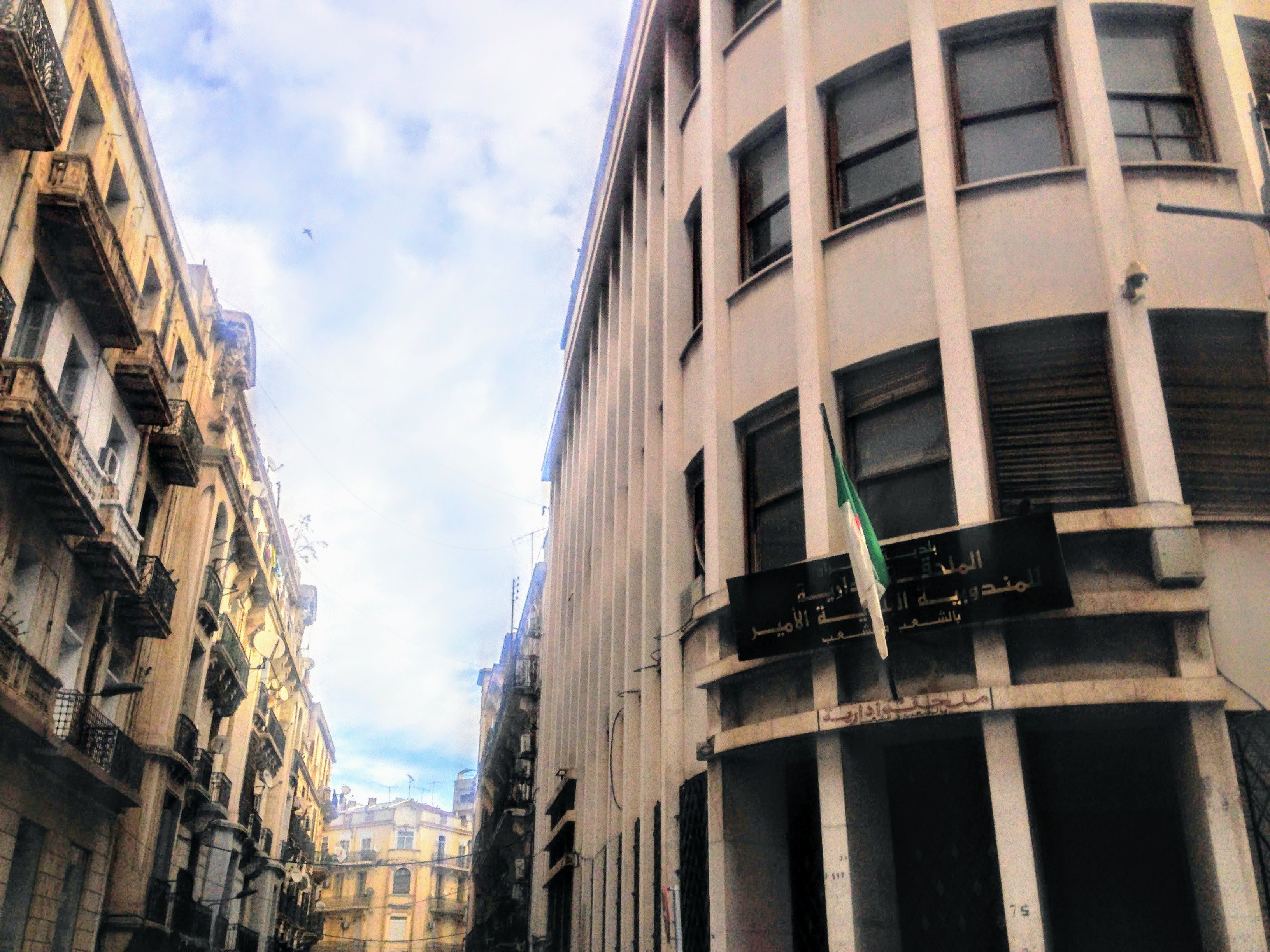
I’ll always remember my first evening in Oran; my father accompanied me from one aunt’s house to another’s which was about a ten minute walk away. I knew the way, I hadn’t entirely understood why I needed to be chaperoned until about three minutes into the walk. Groups, or more like hoards of men, boys, Don Jamals and Yasins, courting…..no one (possibly other Don Jamals, who knows). They were everywhere, dressed in winter dark clothing, the inconsistent street lighting made them all the more menacing. Coffee shops close at around eight pm. There are bars, but they do not advertise themselves, they are hidden in plain sight. Of course everyone knows that they are there, but the windows are always darkened and the door is either firmly shut or kept only very slightly ajar. (My dad knew where they all were because he still likes to drink in them.) And so, men and only men, unemployed men, bored men… they loiter. And they drink, and then a little later they shout, I could hear them as I lay awake at night batting away mosquitoes. A lot of unhinged folk in central Oran. The women are at home. There was nowhere for them to go I realised, especially then, in November, when the days are short and the weather less clement. And it was the most intimidated and out of place I had felt in a long time, if not ever.
One evening, I insisted my father take me to one of these semi-hidden Man bars he’d been frequenting (as respite from the family clan scene.) At this point I had yet to try Algerian wine, which I knew to be good. So to hell with it. I’m a European woman, and I will not be kept at home, I reasoned defiantly, with myself. And testament to my father’s liberal ways, he had no problem with the concept. He just had to figure out where to go. He affirmed, “not all the bars are rough, and on the weekend, you do see women. Sometimes. Maybe one, or two“. Right, then.
In the end he settled on Bar Titanic. A neighbourhood restaurant on the corner, close to the colonnades where Albert Camus once resided. I asked him repeatedly, “Am I going to be the only woman there? Will it be ok?”. The response to each question was a classic hesitative wail, typical of Arabic speakers- a sort of mid-pitched, elongated vowel sound you’re fairly sure is going to end up in something negative and almost certainly will not provide any further clarity. My inner, repressed English woman (by which I mean the Englishwoman in me that I repress) wanted a clear-cut yes or no, but that wasn’t going to happen. As we approached the door, my father looked like a school boy not sure if he was about to do something naughty. Sure enough, we enter a smoke-filled, full on, dude-zone. But apart from the lack of ladies, it was a pretty classy crowd. Men smoking Gauloise cigarettes, mostly drinking a light Oranaise lager. Oddly, listening to 90’s RnB music, which clashed with the seventies style, wood-panelled, nautically themed decor. I did get the impression I was intruding on a gentlemen’s club, and there were some looks, but no impending sense of doom or anything. I mean actually, if they’d turned the music up a little and stuck a drag queen in the corner, we could have been in Soho. My father approached the bar and explained that it was my first time in the country, that I was a tourist, and would we be able to have a glass of Algerian red at the bar. Without making eye contact with me, the waiter said we needed to eat a meal if we wanted wine, downstairs in the restaurant section. We said OK.
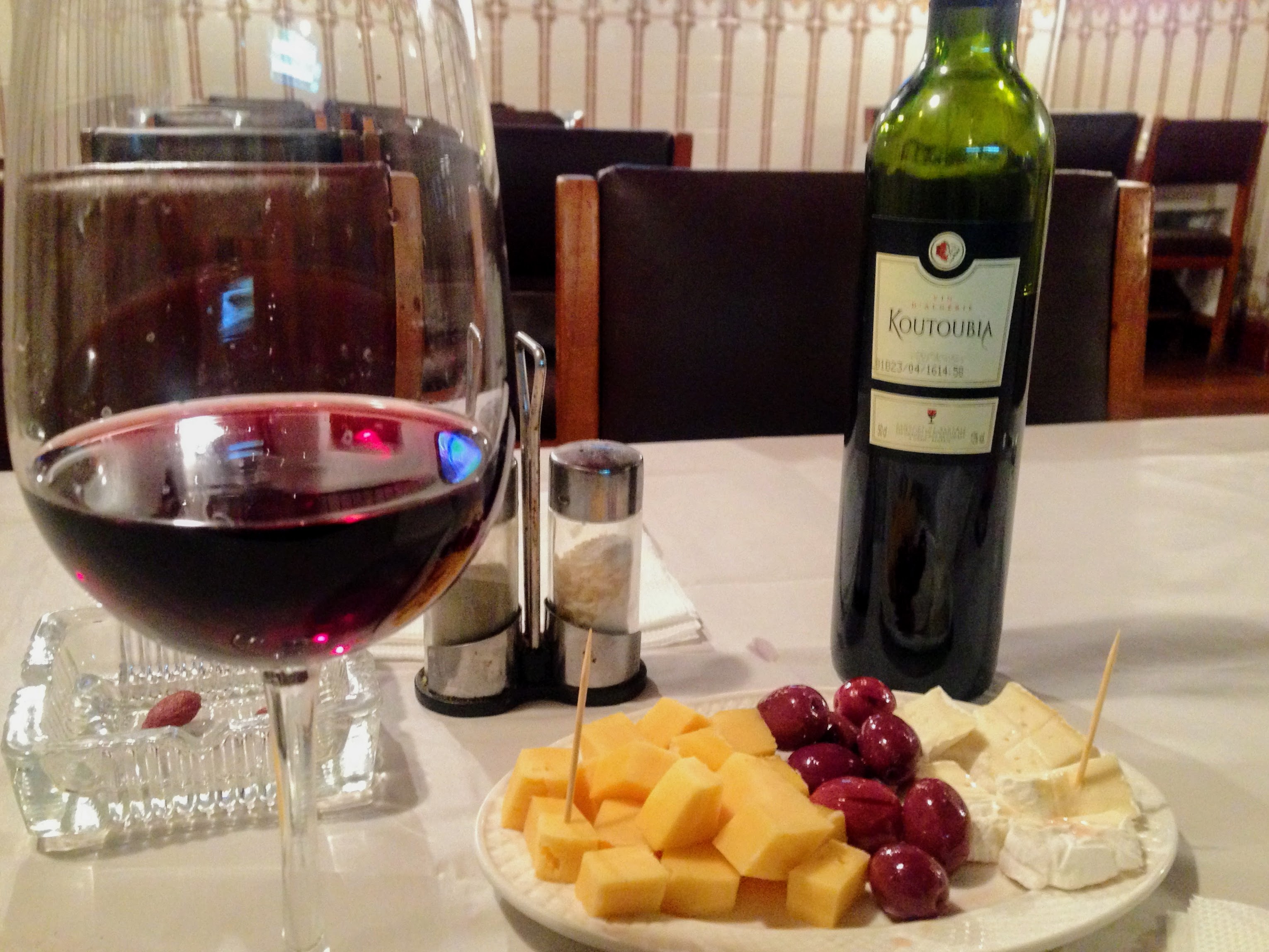
There, the waiter/cook greeted us with normality and smiles and brought us some of the best wine I’ve ever had, accompanied by some olives and Algerian-made Camembert. Perhaps it tasted all the sweeter knowing that I was going against the grain. All the food on the menu was European or French style, and for most of the time, we were the only people there. Eventually a couple of men came down for a bite to eat. My accent-sensitive ears detected that one of them was a Spaniard as he spoke in French with his Algerian colleague, knocking back the Oranaise lager. He looked at ease, and I suspected he might be one of these regular oil and gas representatives in town on business. Spain sources a lot of its gas from Algeria; a fact I would still be ignorant of to this day, were it not for the fact that my family had to grant permission in order for some gas pipes to be laid down on their land.
Wine, cheese and Spanish businessmen aside, I kept asking myself and the universe, “Why don’t women go out more? Why don’t these men bring their wives, friends or daughters? WHERE ARE THE WOMEN?” I’ll admit that I couldn’t let these things go. And like a dog with a bone I gnawed and gnawed and gnawed. The answer my father didn’t want to give me, is that because for many, it’s mal vu. It’s frowned upon. It’s against the religion to drink, after all. Even to be seen near the stuff. But really, this only applies to women, obviously. In the end, I was grateful for the wine. It was taking the edge off the frustration and repulsion felt at all these double standards. My democratically coddled brain was having a hard time processing it, I’ll be honest. But the curious human in me wanted to rationalise, relate, empathise. Understanding a little about their troubled colonial past might help, I figured. So here’s a potted historical round-up:
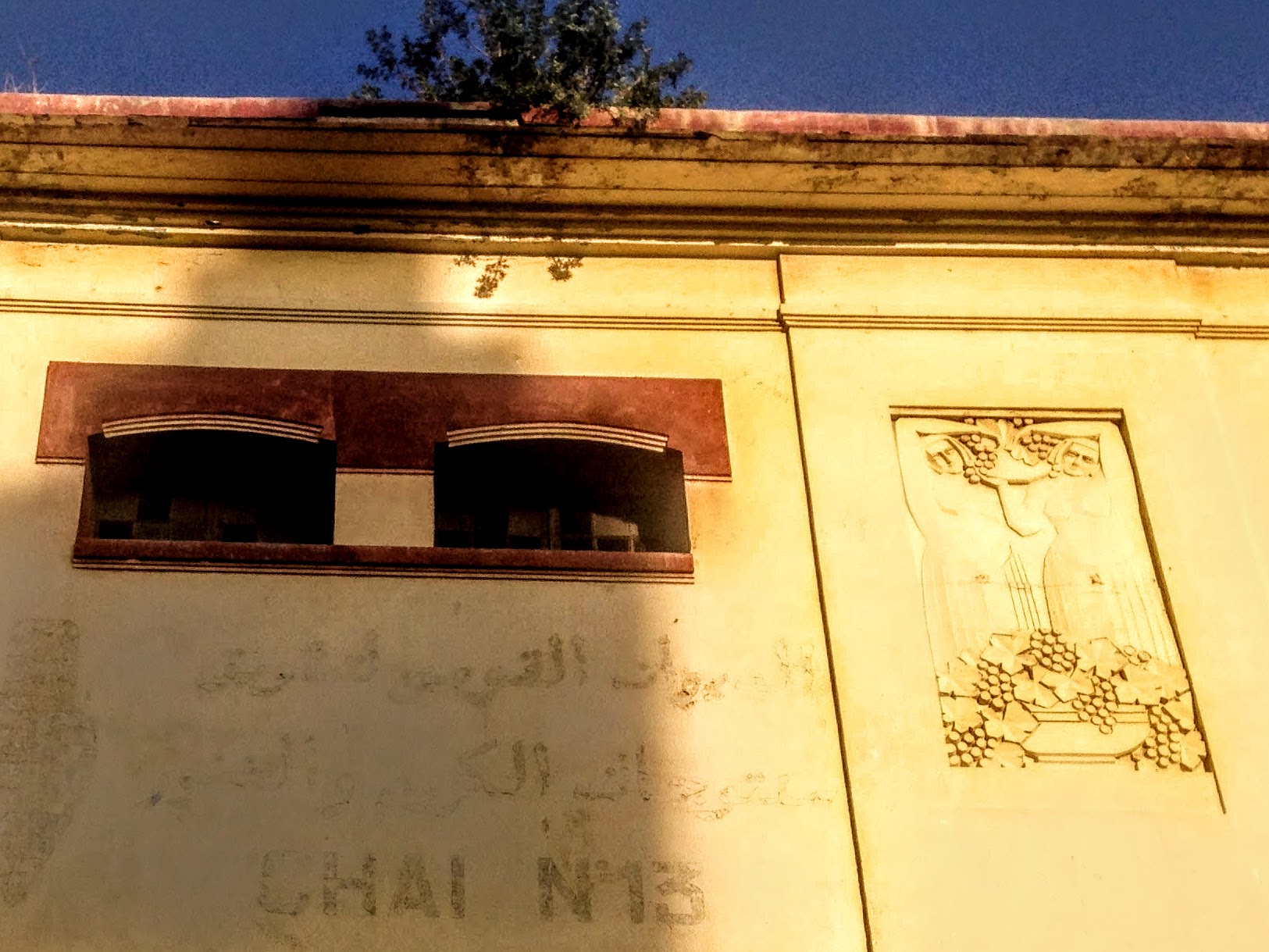
Up until 1962, the French had held Algeria in its abusive grip for 130 years, and in that time had built a beautiful country for themselves. No half measures, no holds barred, all in; France had arrived and France was there to stay. Less a colony per se as an extension of France, Algeria simply became another département and was to be rebuilt in France’s own vainglorious image. Up sprung grand cities, industrious and profitable agricultural centres. They developed a huge wine producing industry- the biggest exporters of wine to Europe. Yes, French wine bottles may have read “mis en bouteille à Château Bla de Bla…” – but that didn’t always necessarily guarantee the wine originated from Château Bla de Bla vineyards (this is still going on today on the DL…Mind BLOWN, I know).
Algerians started to mobilise and fight back in the fifties, and after nearly ten years of guerilla warfare, the battle for independence got tiring, expensive, and really bloody. In 1962 there was a referendum, and much like a red-faced, post-Brexit Cameron, when a definitive fuck-off-France-and-LEAVE vote was confirmed, a swift exodus ensued. It is estimated that about a million people left Algeria, a country that had been home for generations. Among them the European pied noirs from Italy, Spain and France who had settled there, not to mention the thousands of indigenous Algerian Jews who had been granted French citizenship by virtue of not being Muslim, (top marks for classic divide and conquer tactics by the colonisers). And in the wake of the exodus, since the French never actually believed that they would ever leave, the transition period was … kinda messy. No after care package; just a very abrupt and bitter departure. Like the worst break-up you’ve ever had times a million.
1962 was the first time the country had been granted autonomous rule if not ever, then certainly in many, many centuries. Algeria has transitioned from monogamous relationship to monogamous relationship virtually seamlessly between the Spanish, the Ottomans and then the French for five hundred years. As such, this is a country in a very fragile post break-up state. And if we put on our Carrie Bradshaw voices for just a second, maybe Algeria doesn’t really know how to be by herself right now because she’s never really been by herself. In the past few decades, she has been led astray by various nefarious boyfriends, (the corrupt, the tyrannical, the Islamic fundamentalist) who were then quickly put back in their place by some sort of intervention or military coup. But all too often, said boyfriends were not only pardoned, but were then allowed to don suits and take up official roles in parliament. (You can stop with the Carrie voice now). And so resentment grows and cynicism infects all. I suppose that alongside this resentment, a strong desire to reach out for something familiar, Arab (not European) and traditional is understandable. It’s just so disappointing that this need to go trad, also has to involve infantilising women. While I was there, there was talk of increasing the legal driving age from 18 up to 19 for men, and up to 21 for women. (More wine, please).
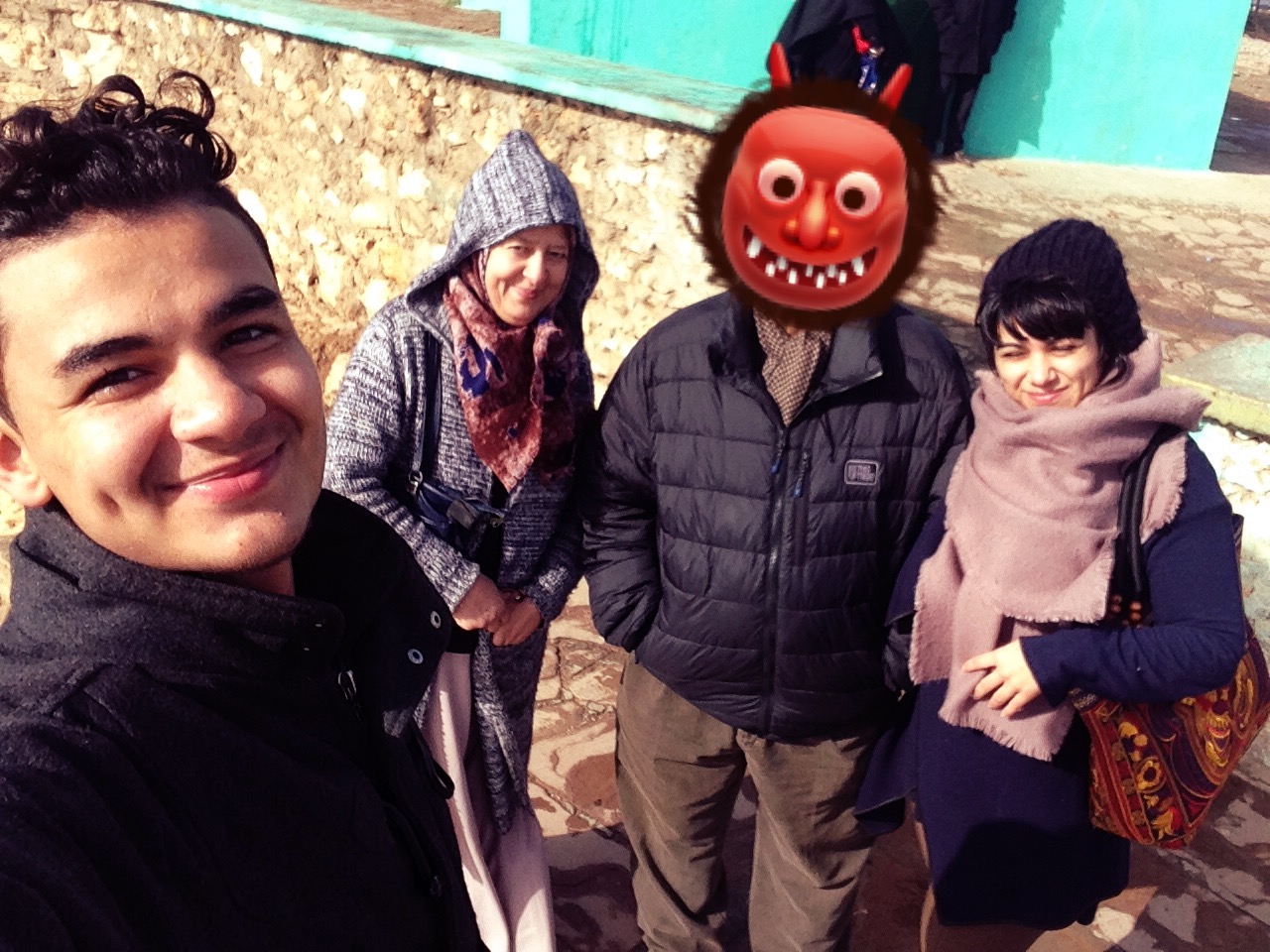
I had known many, but not all of these things about Algeria and my father before setting foot in the country for the very first time on November the 15th 2016.
In my next post, I dab with the youth dem, and realise I haven’t eaten half as much couscous as I thought I would. Peace.
 Farida F. Alvarez
Leave a comment