
Arriving in Algiers
L’Algérie vous souhaite la bienvenue
Our passports were confiscated at border control. Five minutes in the country for the very first time, and already my ‘identity’ was a problem.
An array of copper blonde highlights, bright lipstick against sallow skin and deep brown, heavily made-up eyes greet us at passport control. The female staff have an East Berlin look to them, a kind of Soviet chagrin, and as I observe their faces, one by one, half-heartedly hypothesising a possible correlation between authoritarian and make-up regimes, I notice Miss Copper Highlights isn’t returning my passport and my Algerian ID card. Instead, exchanges are being had in hybrid Algerian-Arabic-French between a slightly nervous gaggle of airport officials and my father, and then off our documents disappear, down a corridor and out of sight.
Forty-five confusing minutes later, we were summoned to a smoky back office where we picked up two typed up letters, officially “cautioning” us for entering the country without valid documentation. Just three weeks before our arrival, it was decided that all dual national Algerians must now either pay for a Visa or enter Algeria on an Algerian passport. Identity Cards are no longer valid travel documents it seemed, but we never got the memo. They’ve only recently made the switchover to biometric passports, so I figured they’re just trying to make their money back. My father of course, took it as a deeply personal attack. A punitive and corrupt move to suck even more money out of the Algerian people.
Sure, that too.
Finally out, flustered but legal, we were met by a couple of cousins; the middle-aged daughter and twenty-four year old grandson of a now deceased great-uncle I never knew. I estimated that before this trip, I had met approximately 7% of my father’s family, maybe less. My father has visited Algeria irregularly and semi-unwillingly over the years, but never with me, so my going was ‘kind of a big deal’, and by now, I was low-key starting to enjoy the BBC3 documentary So your Dad’s from Algeria unfolding in my head.
We drove to another cousin’s apartment in central Algiers. It was night-time already, and airport cousins were informing me that we were now passing the port and the seafront, and that Algiers was a beautiful city. “Yes, yes a beautiful city… but too many Arabs”, my father added, and everyone laughed. Classic Arab dad jokes (I guessed).
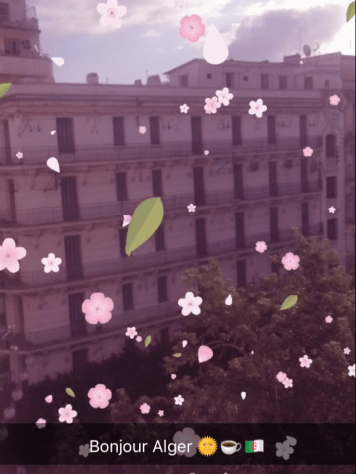
My cousin’s apartment building overlooks lush Mediterranean communal gardens, now known as Les Jardins de la Liberté. A charming oasis of palm, fig, orange and pine trees, arranged on the face of a steep hill, with winding paths and steps leading you all the way up to its brow where you are reconnected with the main road. Here you will find the National Bardo Museum, which includes one of Algeria’s many stunning Ottoman palaces. Opposite is a lookout, from which you can observe Alger la Blanche (Algiers the White), with her roads and avenues cascading down towards the centre, the port and the Mediterranean coastline beyond. All in all, a pretty smart neighbourhood. Pas mal. Pas mal du tout.
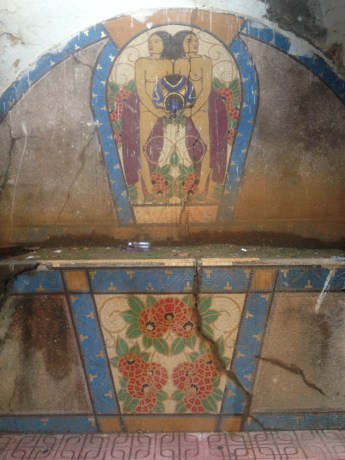
The entrance will take you through to the ground floor lobby, where once upon a colonial time, one would have been greeted by a concierge, and to the right, an ornate iron grill-encased elevator encircled by a staircase. Ascending each floor on foot, you are greeted by frescos or mosaic artworks; a visual reward for every level you successfully complete. There are eight floors in this apartment building and our cousin, 78, lives on the fourth. The lift is out of order and our suitcases are big but not too heavy. My 24-year-old cousin silently takes both suitcases, one in each hand, and power-climbs each flight of stairs like a champ to the fourth floor where we are greeted by our Tata (French term of endearment for one’s aunt, but in this case also applying to a senior cousin with grandmotherly-like status).
My senior cousin, who I had met once before as a child in London, has arthritis and is recovering from a broken hip. She gets about but very slowly. She tells me she hasn’t left the apartment in five weeks. “Ah, right. Because the lift is broken”, I say. She laughs. Everybody laughs. It’s been broken for over twenty years.
The next day, I soon discovered Algiers the White, is a tad grey. Decades of neglect and nasty diesel petrol emissions (in a petrol-rich country) have not been kind. Chaperoned by the middle-aged cousin, we walked with ease from the Sacre Cœur neighbourhood on Rue Didouche, on down to the centre towards the port and the lively commercial hub of the city. There, the shops under the colonnades still bear the European names of their pied noir predecessors. Modistes and tailors by the names of Laurent, Maxime and Jacques spelled out in cursive mosaic form at the doorways, faded and slightly broken after decades of footfall. Their current tenants either continue to sell the same line of products (men’s clothing, linens etc), or have succumbed to flogging to the ubiquitous Made in China wares – sunglasses, mobile phone cases, generic tat and chavvy clothes.
Before we had set out, my middle-aged cousine had advised me not to wear the skirt she’d seen me arrive in whilst in Algeria. Advice I observed and then dismissed after a few days. “Not because girls don’t wear skirts slightly above the knee”, she had explained, “it’s just that they are in a minority, and you don’t want to attract attention to yourself or make yourself stand out anymore than necessary”. I played along for about three days until I realised this was horse crap. (Later, other female cousins of mine corroborated the horse crap).

Yes, men did comment and approach, but I got the impression they didn’t really expect a response; this isn’t going to get me anywhere anyway, so I may as well get weird with it was a distinct vibe I picked up from some. I couldn’t understand what was being said in Arabic, but of the French I caught such classic lines as “are you married?” and the heart stopping “you have nice legs”. I’ve heard worse. I’ve also heard better and I don’t really believe it was my skirt that was doing it. (Honestly, I’ve known nuns to show more leg than me. Slightly exposed knees in 40 denier tights, I was hardly slutting it up). I think I attracted attention simply for being a woman. Any woman. A non-man, if you like.
I knew that cousine‘s words of warning were kindly meant; after all she knows what it’s like to be a woman in an Arab country, and I suppose she just wanted to curb any potential “unpleasantness” when sightseeing in town. The inevitable street advances I could handle. More difficult to negotiate was the GLARE. That feeling of three dozen eyes following you as you go past a coffee shop terrace. Knees visible or not.
It became clear that culturally and socially, coffee shops are dude zones and no place for a lady. This was something I was not prepared for. Alarmingly, my father couldn’t accept my observation, and demanded to know from where I had got this preposterous idea (answer: my female cousins who actually live there, plus my eyes and brain). Not that I imagine I would have been chased out if I had gone into one of these Merguez fests, but personally, I like my coffee glare-free. I’m glare-intolerant, always have been. (Merguez, in case you’re not in the know, are delicious, North African spicy lamb sausages. Or just Algerian, depends on who you’re talking to. Accept no substitutes though, I’ve seen Waitrose try it, and, you know, just, NO. Stop it Waitrose. Do we really need to have this conversation? Haven’t you done enough damage with your Harissa chicken wraps? Get yourself to a Maghrebin halal butchers. They’re the real deal).
And so it was often the case in Algiers and later Oran, that I would have to walk past five or six beautiful, old world, Insta-vintage-dream-cafes (now reverted to men’s ‘smoking parlours’), until I had reached one that was mixed and had a zone de famille. Women do drink coffee of course, but the outdoor coffee drinking market clearly favours humans who have penes, and apart from being infuriating, it all seemed so utterly absurd to me.
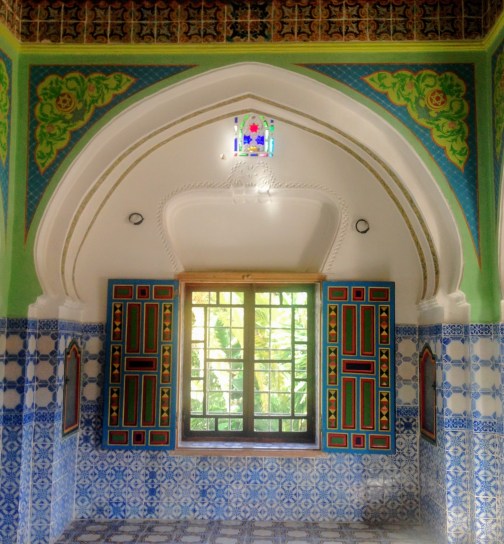
Writing this on my own in a cafe back in London, it occurs to me that our coffee shop market clearly favours humans who have Macbooks. But I feel relieved knowing that the only glare I will be subjected to here, most likely, will be the one off my computer screen.
In my next post, I discover my orientalist tendencies, learn some family history and travel to Oran.
 Farida F. Alvarez